推拿Most approachable
Tuina Massage
A restorative, fully clothed bodywork session using pressing, rolling and stretching techniques.
- English-friendly welcome
- Pressure preference check
- Back, neck or full-body focus
60–90 min$69
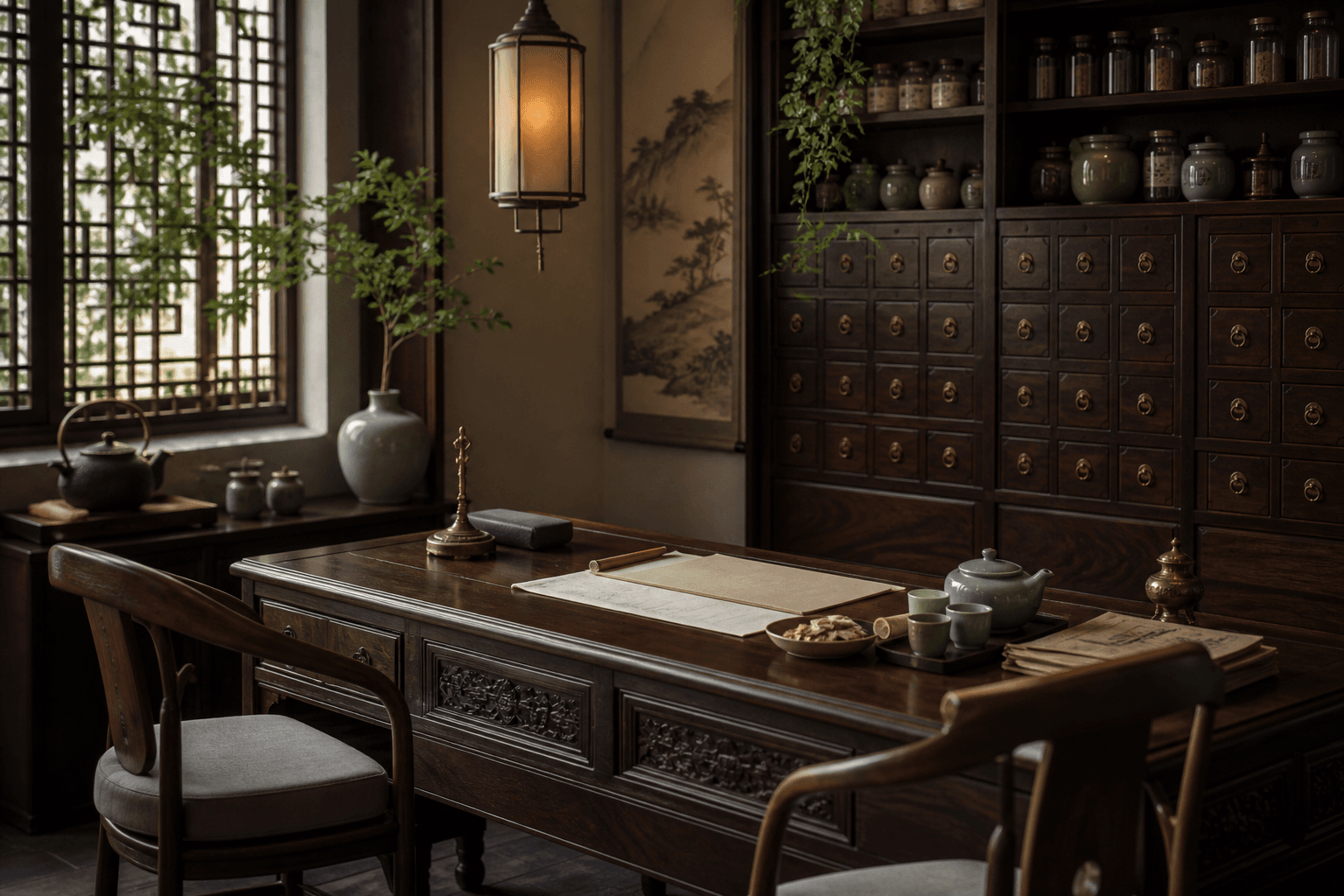
Touch · Rest · Restore
Slow down with a hands-on experience you can actually feel—from tuina massage and acupuncture to cupping. Welcoming, professionally hosted, and easy to understand for first-time visitors.
Choose by how you want to feel
No prior knowledge needed. Start with the most approachable experience, then decide whether you want to explore deeper.
A restorative, fully clothed bodywork session using pressing, rolling and stretching techniques.
A calm introduction to acupuncture, followed by a personalized session if it is suitable for you.
Discover the warmth and gentle suction of traditional cupping in a professional wellness setting.
A simple, no-pressure introduction to familiar Chinese herbs through aroma, stories and a warm herbal tea.
Your comfort comes first. Acupuncture and cupping are optional and should only be provided after screening by appropriately qualified local practitioners. Tell your host about pregnancy, medications, skin conditions or other health concerns before a session.
Section 01
一切,从变化开始
Ancient Chinese thinkers saw the world not as something static, but as a network of constantly changing relationships.
Day becomes night.
Winter becomes spring.
Activity gives way to rest.
From this observation emerged one of the most influential ideas in Chinese thought:
Balance is not stillness.
Balance is the ability to adapt to change.
阳YANG · LIGHT · ACTIVITY
阴YIN · SHADE · REST
Section 02
从天地,到身体
Traditional Chinese medicine developed within a broader Chinese worldview in which the human body was understood as part of nature rather than something completely separate from it.
Climate, seasons, sleep, food, emotions and physical symptoms were traditionally considered together.
Health was interpreted as a dynamic relationship between different systems and patterns.
Section 03
同一种不舒服, 为什么会有不同的解释?
Same complaintHEADACHEDifferent traditional patterns
Traditional Chinese medicine historically emphasized identifying patterns across the whole person. Two people describing the same symptom could traditionally be interpreted differently depending on accompanying signs and circumstances.
This historical framework differs from modern biomedical diagnosis and is presented here for cultural and educational understanding.
Section 04
四诊
Long before laboratory tests existed, physicians gathered information from what they could observe, hear, ask and feel.
Section 05
一只手腕, 为什么能摸这么久?
In traditional Chinese medicine, pulse examination developed into a complex diagnostic art. Practitioners historically described not only pulse speed, but also depth, strength, rhythm and texture.
浮 · Floating
Felt more clearly with light pressure.
Explore the three wrist positions
Guan, the middle position, is located beside the radial prominence.
Traditional theory does not replace modern medical testing.
Section 06
为什么流传了几千年?
针灸
STORY 01 · ACUPUNCTUREAcupuncture developed in China more than two millennia ago and is now practiced around the world. Modern research has investigated it particularly in areas such as pain management; findings and evidence quality vary by condition.
Experience Acupuncture Culture青蒿
STORY 02 · QINGHAOQinghao appears in Chinese herbal history. Research informed by traditional knowledge contributed to the development of artemisinin-based antimalarial medicines—a landmark in modern medicine.
中药
STORY 03 · THE HERBAL PHARMACYChinese materia medica includes roots, barks, flowers, fruits, minerals and fungi arranged into complex formula traditions. Historical continuity is culturally significant, but does not mean every traditional use is scientifically proven.
Section 07
打开百子柜
菊花
PartFlower
PreparationInfused as a light tea
Traditional Use
Presented as an approachable taste of Chinese herbal culture—not as a prescription or treatment.
Interesting fact: Chrysanthemum tea is a gentle bridge between everyday tea culture and the traditional apothecary.
Traditional uses are cultural and educational information, not medical advice or guaranteed benefit.
Section 08
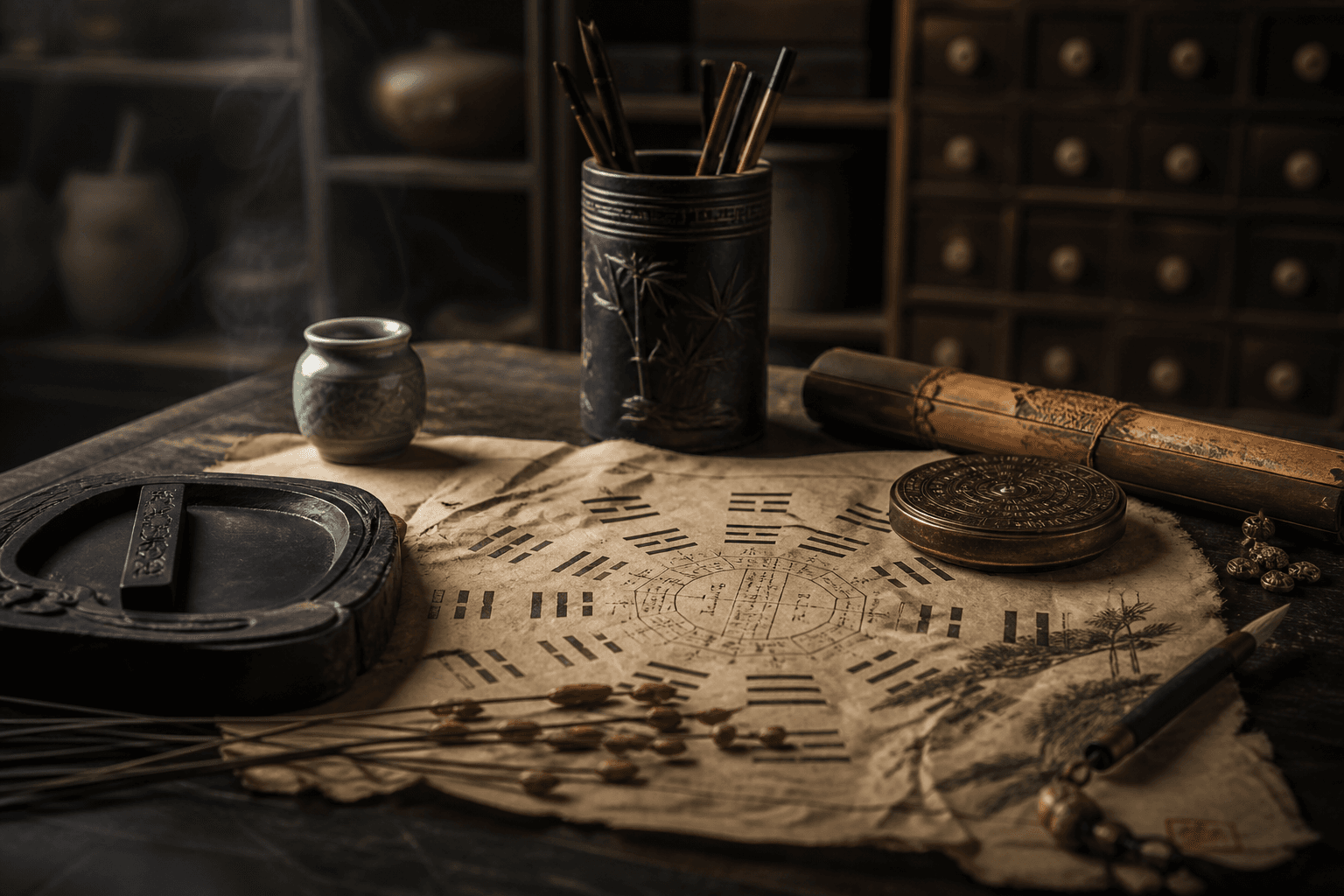
在医学之前, 先有一种理解变化的方法。
The I Ching is not a medical textbook.
But ideas of change, polarity, cycles and correspondence became deeply influential across Chinese intellectual history.
The same civilization that searched for patterns in the body also searched for patterns in nature, time and human affairs.
易
CHANGE
⚊YANG
⚋YIN
8 trigrams · 64 hexagrams
Section 09
古代中国人,试图读懂什么?
身体
BODY中医
TRADITIONAL CHINESE MEDICINE变化
CHANGE易经
I CHING时间
TIME八字
BAZI时机与方向
TIMING & DIRECTION奇门遁甲
QIMEN DUNJIA环境
PLACE风水
FENG SHUIDifferent traditions. One enduring fascination:
Finding patterns in a changing world.
Section 10
从身体,到命运
The fascination with patterns did not stop at the human body. Traditional Chinese systems also developed ways of interpreting time, direction, place and destiny.
八字
Reading Time
Traditional cultural interpretation奇门遁甲
Reading Timing & Direction
Traditional cultural interpretation风水
Reading Place
Traditional cultural interpretationThese systems are presented as cultural traditions, not scientifically validated methods of prediction.
Section 11
不要只是阅读。亲自进入这个世界。
60–90 min · From$69
60 min · From$89
60 min · From$79

Half day · From$199
中国不只有长城和故宫。
A China of herbs and meridians.
Of Yin and Yang.
Of mountains, temples and tea.
Of physicians reading the pulse.
Of philosophers studying change.
And of traditions that have shaped the way generations of Chinese people understood the body, nature and human life.